
Utility Work That Protects What's Underground
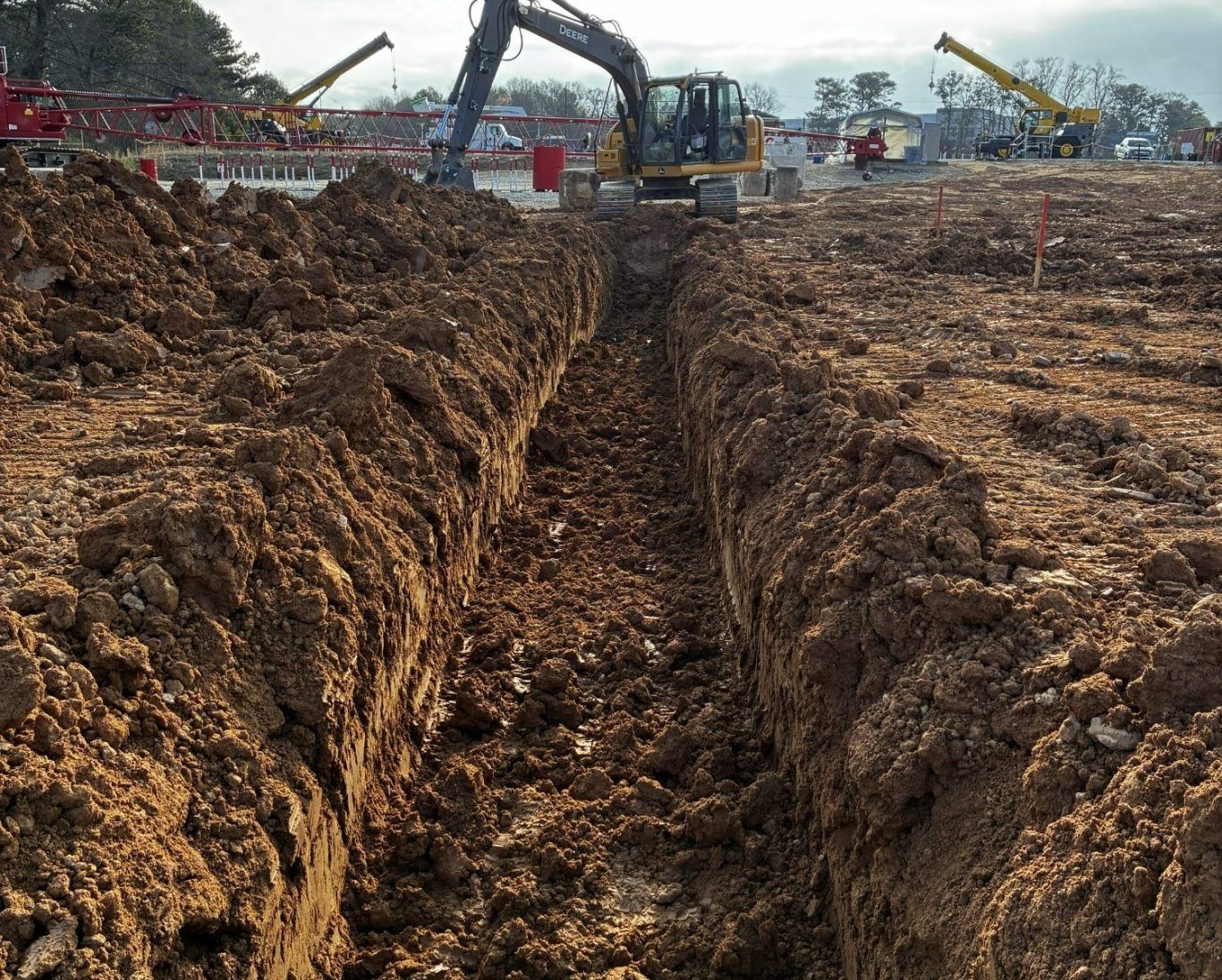
Trenching in Marietta for utility installation requiring safe excavation and proper compaction to prevent future settling
Labrador Land Alterations provides trenching services in Marietta with an approach grounded in safety protocols and proper equipment use. You need this service when utility lines require installation or replacement and excavation must occur near existing infrastructure. Georgia's rocky subsoil and clay conditions require specialized procedures that account for trench wall stability and safe working conditions.
The work involves careful excavation around existing utilities using hand-digging methods where necessary, shoring trench walls above four feet in accordance with OSHA requirements, and compacting backfill in lifts to prevent the ground from settling months after the trench is closed. Georgia clay doesn't compact uniformly without proper technique, which means quick backfill approaches leave depressions that collect water or create trip hazards over time.
Schedule a site evaluation to review utility locations and soil conditions specific to your property.
What Proper Trenching Requires
Safe trenching starts with locating existing utilities through 811 calls and then hand-digging within marked tolerance zones to avoid striking lines. When trenches exceed four feet in depth, trench boxes or shoring systems are installed to protect workers from cave-ins, a requirement often skipped by crews prioritizing speed over compliance. Equipment certification and OSHA safety compliance aren't optional steps—they're the baseline for responsible excavation work.
Once utilities are installed and inspected, you'll notice the trench is backfilled in controlled lifts rather than dumped in all at once. Each lift is compacted using mechanical equipment before the next layer goes in, which prevents the soil from compressing unevenly under its own weight later. The surface remains level without depressions forming where the trench was cut, and pavement or landscaping installed over the backfill doesn't crack or sink within the first year.
Labrador Land Alterations operates with certified equipment and follows safety standards that account for Georgia soil behavior. The service includes utility location coordination, trench wall protection where depths require it, and backfill compaction that meets engineering standards rather than visual inspection alone.
Questions Property Owners Usually Ask
Trenching work involves excavation near critical infrastructure, and property owners in Marietta often want clarity on safety measures and soil conditions before work begins.
What makes Georgia soil challenging for trenching?
Rocky subsoil and expansive clay create unstable trench walls that require shoring above certain depths, and clay doesn't compact properly without controlled lifts and mechanical equipment.
How are existing utilities protected during excavation?
Hand-digging is used within tolerance zones around marked utilities, and locates are confirmed before mechanical excavation begins in any area.
When is trench shoring required?
OSHA mandates trench protection systems for excavations deeper than four feet, and soil conditions in this region often require shoring even in shallower cuts where clay walls show cracking.
What happens if backfill isn't compacted in lifts?
Soil settles unevenly over months, creating depressions that collect water, damage pavement, or require rework to bring the surface back to grade.
How long does trenching work take for typical utility runs?
Duration depends on trench length, depth, proximity to existing utilities, and whether rock is encountered, but proper compaction and safety measures are never shortened to meet arbitrary timelines.
Labrador Land Alterations completes trenching work with attention to safety protocols and compaction standards that prevent future problems. Request a consultation to discuss your utility installation and site-specific soil conditions.