
Earthmoving Accuracy for Solid Foundations
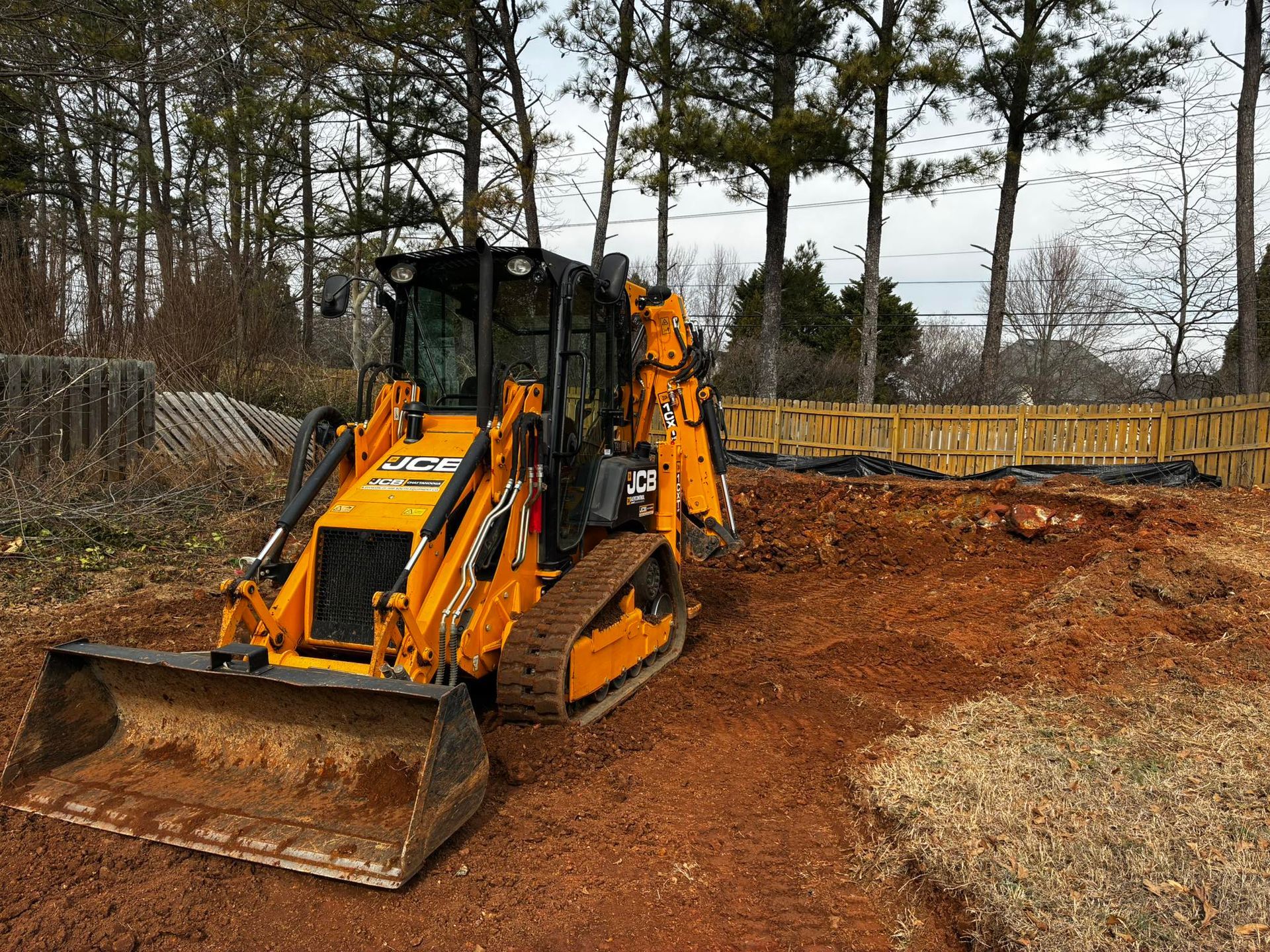
Excavation in Marietta for residential construction on challenging red clay soil
Metro Atlanta's red clay creates different excavation challenges than standard topsoil—it compacts when wet, hardens when dry, and forms hardpan layers that standard equipment struggles to penetrate. Labrador Land Alterations provides excavation services for residential construction projects where soil conditions require proper testing and equipment selection before digging begins. The work involves removing calculated volumes of earth to specified depths while maintaining slope stability and managing clay's unique drainage characteristics.
Grade stakes establish precise elevation targets before excavation starts, ensuring foundation depths meet engineering specifications. Red clay's tendency to hold water means drainage planning happens during excavation, not after backfill. When hardpan conditions appear during digging, rental equipment access provides the specialized machinery needed to break through compacted layers without delays or incomplete excavation.
Arrange an on-site assessment to evaluate soil conditions and confirm depth requirements for your project.
How Red Clay Affects Excavation Methods
Soil testing identifies clay density, moisture content, and hardpan depth before equipment selection occurs. Trade school certification ensures operators recognize when standard excavation equipment reaches its limits and specialized machinery becomes necessary. Red clay behaves differently than sandy or loamy soils—it forms vertical walls when dry but slumps when saturated, requiring shoring or slope adjustments based on weather conditions during excavation.
Once excavation completes, you'll see clean vertical or sloped walls cut to grade stake elevations, with bottom surfaces level and free of standing water. The excavated area matches foundation dimensions without over-digging that requires additional backfill or under-digging that compromises structural support. All removed soil is staged where it won't interfere with ongoing construction or hauled if site conditions don't allow on-site storage.
Precision excavation means foundation contractors arrive to find dig depths and dimensions matching their plans exactly. This eliminates costly rework from incorrect depths or out-of-square excavations that delay construction schedules. The attention to grade stakes and soil management reflects military training where measurements matter and job completion means meeting specifications, not approximating them.
Answers to Frequent Service Questions
Residential excavation in Georgia's red clay raises specific questions about equipment, timing, and soil management that affect project planning.
What is hardpan and why does it matter?
Hardpan is a dense clay layer compacted over time that resists standard excavation equipment. When encountered, specialized machinery breaks through without project delays, ensuring excavation reaches required depths for proper foundation support.
How do grade stakes guide excavation accuracy?
Stakes are placed at specific elevations before digging begins, giving equipment operators visible targets for depth and slope. This ensures excavated areas match engineering plans rather than relying on visual estimation that leads to rework.
Why does red clay require different techniques than other soils?
Georgia red clay compacts tightly when wet and hardens when dry, creating conditions where standard digging methods either bog down equipment or fail to penetrate compacted layers. Recognizing these conditions during excavation prevents equipment damage and incomplete digging.
What happens to excavated soil during construction?
Soil is either staged on-site away from work areas for later backfill or hauled depending on project needs and available space. Red clay's weight and volume make storage location planning important before excavation starts.
When should excavation occur relative to other site work?
Excavation happens after land clearing and utility marking but before foundation work begins. In Marietta's climate, scheduling considers seasonal rainfall since wet clay behaves differently than dry clay during digging and slope management.
Labrador Land Alterations approaches excavation with the same discipline applied during military service—specifications are met, measurements are verified, and the job is completed correctly before moving forward. Contact our team to discuss soil conditions and excavation requirements for your residential construction project.