
Lawns That Take Root the First Season
Sod Installations in Marietta for new lawns requiring soil preparation that supports root establishment
Sod laid directly over unprepared soil struggles to root in Georgia clay, leaving you with brown patches and thin coverage by the end of the first summer. Labrador Land Alterations prepares soil before sod installation by assessing existing conditions, incorporating amendments that improve drainage and nutrient availability, and applying starter fertilizer that supports root growth during the establishment period. The difference shows up in lawns that green up uniformly and develop deep root systems rather than sitting on top of compacted clay.
Soil testing identifies pH imbalances and nutrient deficiencies, and amendments are tilled into the existing soil rather than simply spread on the surface. Georgia climate requires variety selection that tolerates heat and humidity, and rolling after installation ensures sod makes contact with prepared soil across the entire root zone.
Schedule a lawn evaluation to discuss soil conditions and sod variety options for your property.
How Preparation-Focused Installation Works
Soil preparation determines whether sod establishes quickly or struggles through the first season. Clay soil is loosened and amended to improve structure, allowing roots to penetrate rather than sitting in a compacted layer. Fertilizer incorporation provides nutrients at root depth where they're accessible during establishment, and soil testing removes guesswork about what amendments are actually needed rather than applying generic treatments.
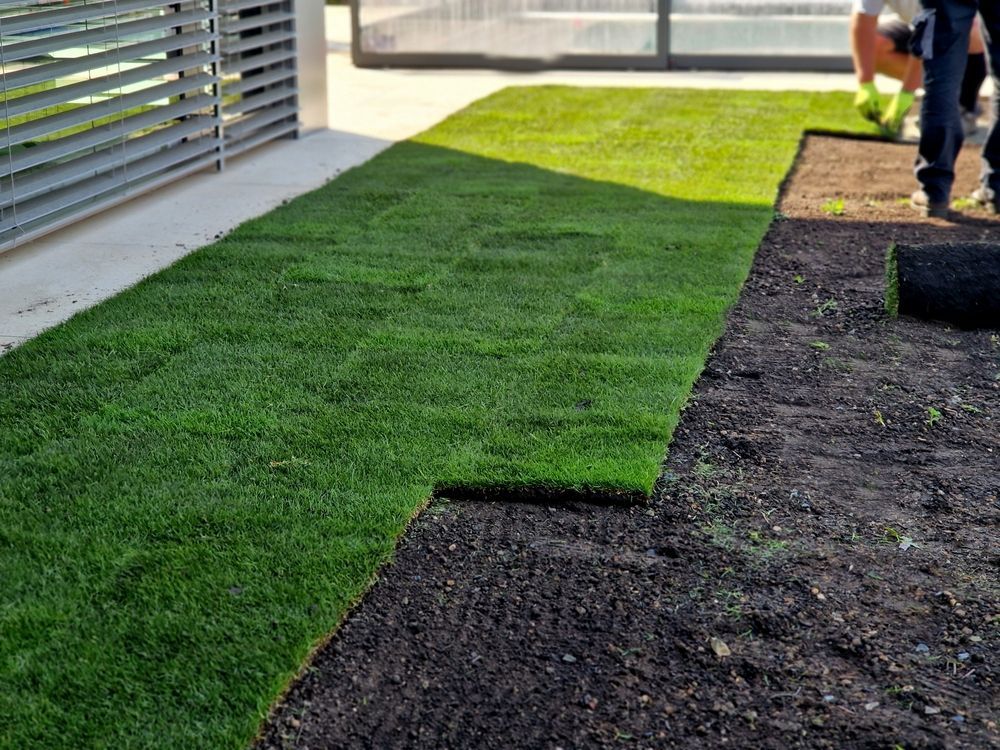
After installation, you'll notice the sod greens up within the first two weeks rather than remaining pale or developing yellow streaks. Roots anchor into the soil beneath rather than lifting when walked on, and the lawn tolerates foot traffic without tearing or creating bare spots. Watering penetrates the root zone instead of running off compacted clay, and growth remains consistent across the yard without patches that stay thin or fail to fill in.
The service includes soil assessment, amendment application based on test results, variety selection appropriate for site conditions and intended use, and rolling to establish root-to-soil contact. Sod is laid in a staggered pattern to prevent seam erosion, and edges are trimmed to fit beds and borders without gaps.
What Property Owners Usually Ask
Sod installation success depends on preparation work that happens before the first roll is laid, and homeowners in Marietta often want to understand how soil conditions affect establishment before committing to the project.
What does soil testing reveal before sod installation?
Testing identifies pH levels, nutrient deficiencies, and organic matter content, which determine what amendments are needed to support root growth in your specific soil rather than applying standard treatments that may not address actual limitations.
How does Georgia clay affect sod establishment?
Clay compacts easily and drains poorly, preventing roots from penetrating and causing water to run off rather than soaking in, which is why loosening and amending the soil before laying sod is essential for successful rooting.
When is the best time to install sod in this climate?
Fall and early spring provide moderate temperatures and natural rainfall that support establishment without heat stress, though summer installation succeeds when irrigation is managed properly during the first four weeks.
What does rolling after installation accomplish?
Rolling presses sod roots into direct contact with prepared soil, eliminating air pockets that dry out roots and preventing sod from lifting when walked on before roots anchor.
How long until sod is fully established?
Roots typically penetrate soil within two to three weeks with proper watering, but full establishment takes six to eight weeks when roots reach depth that allows the lawn to tolerate normal use and reduced irrigation.
Labrador Land Alterations installs sod with soil preparation that supports root establishment in Georgia clay conditions. Contact us to discuss lawn installation and schedule a soil assessment for your property.