

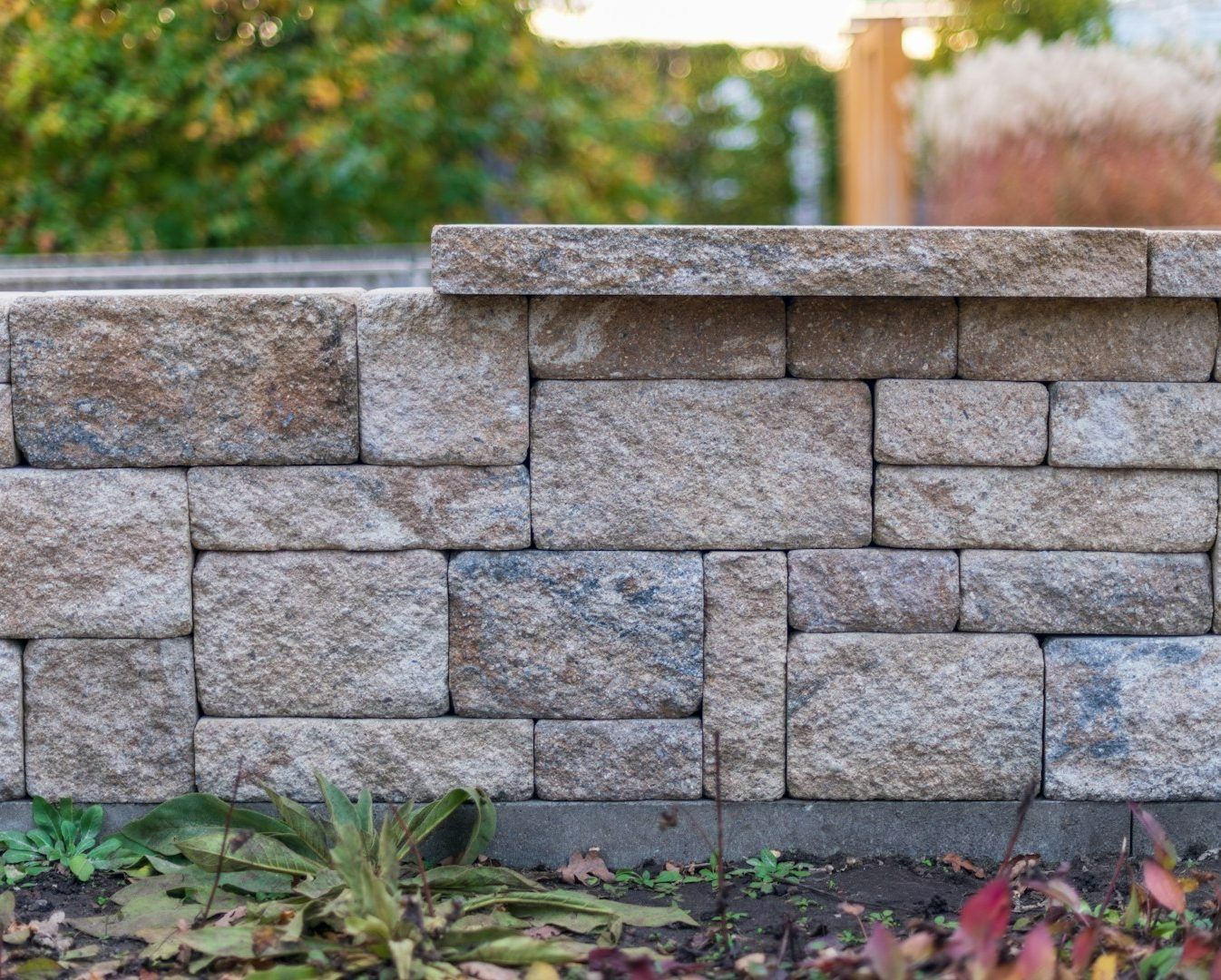
Walls That Hold Against Soil Pressure
Retaining Walls in Marietta for slope stabilization and grade changes requiring engineered drainage systems
Retaining walls fail when hydrostatic pressure builds behind them, a common problem in Georgia where expansive clay soil holds water rather than allowing it to drain naturally. Labrador Land Alterations installs retaining walls with drainage systems integrated into the design and backfill compacted in controlled lifts to prevent pressure buildup. You'll see the difference in walls that remain plumb and level through wet seasons rather than bowing or leaning forward as trapped water pushes against the structure.
The installation process includes excavating below grade to create a stable footing, placing drainage pipe behind the wall to redirect water away from the structure, and backfilling with gravel in the drainage zone before compacting soil in lifts moving upward. Each lift is compacted mechanically before the next layer is added, which prevents settlement that would shift the wall over time.
Request a property evaluation to review slope conditions and discuss wall design options for your site.
What Changes After Engineered Wall Installation
Engineered retaining walls address soil behavior rather than simply stacking blocks to hold back dirt. Drainage installation behind the wall prevents water from saturating the soil and creating hydrostatic pressure, while proper backfill compaction eliminates voids that allow soil to shift. Understanding Georgia clay conditions means anticipating expansion during wet periods and designing drainage to handle that water movement.
Once the wall is complete, the grade change remains stable without the wall leaning or blocks shifting out of alignment. Water exits through drainage outlets rather than seeping through joints or pooling behind the structure, and plantings or lawn areas above the wall don't develop cracks or depressions from backfill settling. The wall maintains its position through seasonal cycles without requiring block realignment or rebuilding.
Retaining wall projects at Labrador Land Alterations are approached with the same excavation precision and soil knowledge applied to foundation work. Wall height, soil conditions, and drainage requirements determine design specifics rather than following a single installation method across all projects.
Answers to Frequent Service Questions
Retaining wall installations involve engineering considerations that affect long-term stability, and property owners often ask about drainage and soil factors before starting construction.
Why do retaining walls fail in Georgia?
Expansive clay soil retains water and creates hydrostatic pressure behind walls, which pushes blocks forward and causes leaning or collapse when drainage isn't installed to relieve that pressure.
What does drainage installation behind a wall involve?
Perforated pipe is placed at the base of the wall surrounded by gravel, creating a path for water to flow away from the structure rather than saturating the soil and building pressure.
How is backfill compacted properly?
Soil is placed in six- to eight-inch lifts and compacted with mechanical equipment before the next layer is added, preventing voids and settlement that would shift the wall over time.
When is engineering required for retaining walls in Marietta?
Walls over four feet typically require engineering stamps, and taller walls or those supporting structures need load calculations to ensure footing and drainage design handle the specific soil conditions.
What separates basic stacking from engineered installation?
Basic stacking places blocks without drainage or compacted backfill, relying on wall weight alone to resist soil pressure, which fails when water saturates clay soil and creates forces the wall can't withstand.
Labrador Land Alterations builds retaining walls with drainage systems and compaction techniques that account for Georgia soil behavior. Schedule a consultation to discuss your grade change requirements and review site-specific conditions.